
Laminating Film Thickness Guide
Index
Laminating film thickness determines how stiff, durable, and professional a finished item feels — but it also affects how easily the film runs through your machine. Choosing a thickness that is too heavy or too light for the job can mean wasted film, poor results, or a machine that cannot process it at all.
This guide explains how laminating film thickness is measured, how microns and mils convert, and which thickness suits each application. It is a deeper look at the film choices introduced in our guide to choosing laminating rolls and films.
Note: Supported film thickness varies by laminator model. A machine may not process films outside its rated range, and pouch thickness is usually quoted per side. Always confirm the supported thickness with the machine manufacturer or an authorised supplier before ordering film.
Key Takeaways
- Film thickness is commonly measured in microns (µm) or mils; the two units convert directly.
- For laminating pouches, thickness is normally quoted per side, so a "125 micron" pouch is roughly 250 microns of film in total once both sides are counted.
- Thicker film adds stiffness and durability; thinner film is more flexible and economical.
- The machine must support the chosen thickness — heavier film may require more heat, more pressure, or a wider feed gap.
How Laminating Film Thickness Is Measured
Laminating film thickness is expressed in one of two common units. Microns (µm) are widely used in Europe and other metric markets — one micron is one-thousandth of a millimetre. In the United States, film thickness is often measured in mils, where one mil is one-thousandth of an inch.
For laminating pouches, an important detail is that thickness is normally quoted per side. A pouch described as "125 micron" applies 125 microns of film to each face, so the finished item carries roughly 250 microns of film in total. Keep this in mind when comparing pouch products or reading specifications.
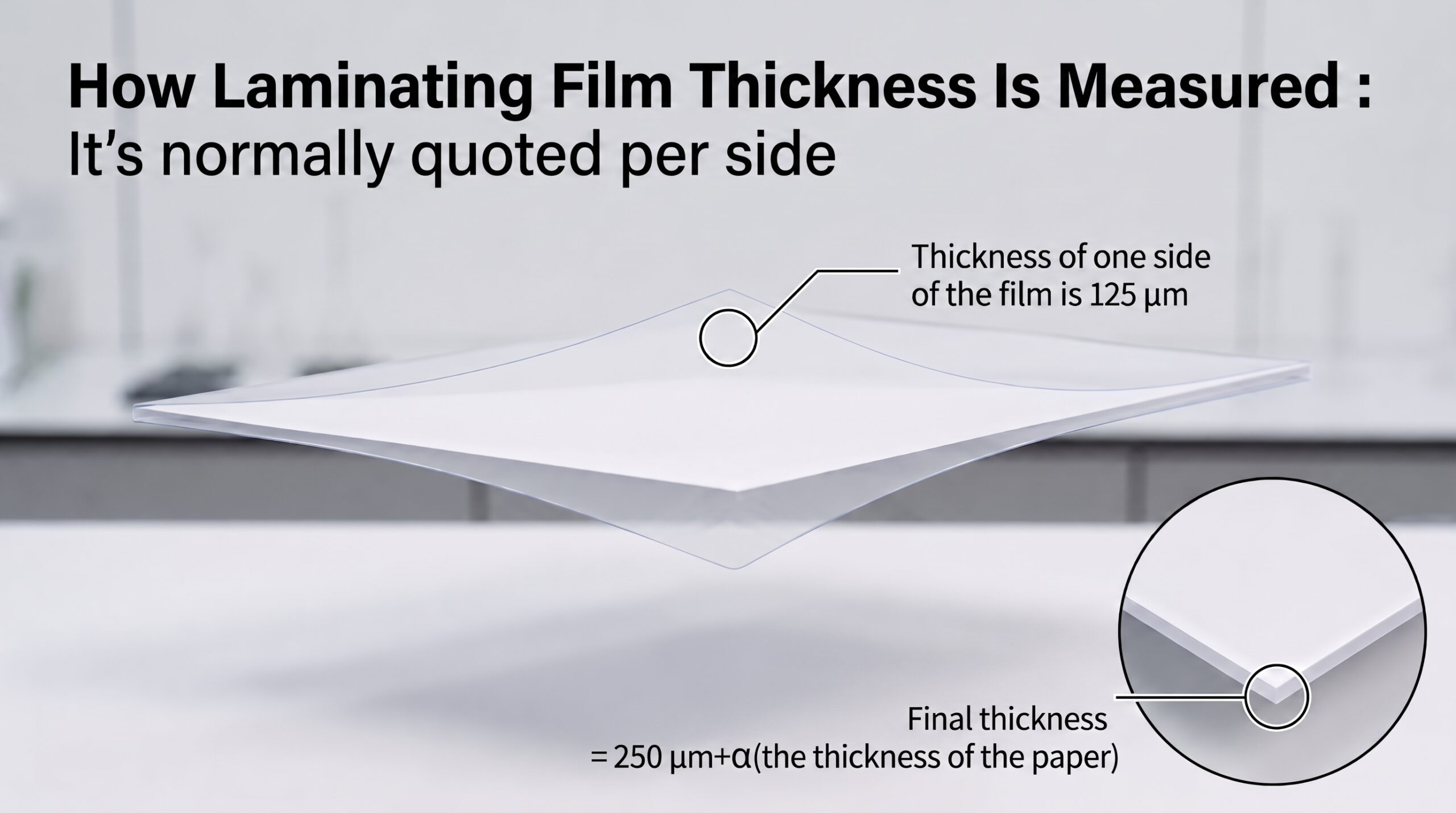
Schematic cross-section, not to scale.
Pouch thickness is usually quoted per side.
Pouch thickness is usually quoted per side.
Micron to Mil Conversion Chart
The table below shows common thicknesses and their approximate equivalents. Values are rounded for everyday use.
| Mil (US) | Micron (approx.) | Typical description |
|---|---|---|
| 1.5 mil | ≈ 38 microns | Light / economical |
| 3 mil | ≈ 75–80 microns | Standard everyday |
| 4 mil | ≈ 100 microns | Standard-plus |
| 5 mil | ≈ 125 microns | Durable / sturdy |
| 7 mil | ≈ 175 microns | Heavy-duty |
| 10 mil | ≈ 250 microns | Maximum rigidity |
Thickness by Application: A Quick Reference
Thicker is not automatically better. The right thickness depends on how the item will be handled, how long it must last, and whether the machine can process it. Use the guide below as a starting point, then confirm your machine's supported range.
| Thickness (per side) | Feel & durability | Typical applications |
|---|---|---|
| 80 microns | Light, flexible, economical | Temporary notices, presentation folders, card sets, short-run or seasonal menus and route maps |
| 100–125 microns | Sturdier, holds its shape | Signs, ID cards, menus, and documents that are handled often or under strain |
| 250 microns | Rigid, maximum durability | Heavy-duty items — workshop manuals, long-term ID cards, outdoor or long-life signage |
Light Film (around 80 microns)
Light film is economical and flexible, making it a good choice for temporary or high-turnover materials where long-term durability is not essential. On machines that support this thickness, it can be easier to process and helps keep consumable costs low for large volumes of short-life items.
Medium Film (around 100–125 microns)
Medium film adds stiffness and protects against wear, so it suits materials that are handled regularly, such as menus, ID cards, and frequently used signs. It is the most common general-purpose range for business materials that need to last but do not require maximum rigidity.
Heavy Film (around 250 microns)
Heavy film gives a rigid, hard-wearing finish for items that must survive frequent handling or, when the film is suitable for outdoor use, outdoor exposure. It offers greater protection, but it may require higher heat, stronger pressure, or a machine rated for thicker film — so machine and film compatibility must be confirmed first.
How Thickness Affects Machine Performance
Thickness is not only about the finished feel; it also affects processing. Heavier film generally needs more heat and pressure to bond properly, and using film outside a machine's supported range can result in poor adhesion, curling, cloudiness, or jams.
Before switching to a thicker film, check the laminator's rated thickness range. Film that exceeds what the machine supports is a common cause of jams and rejected output. If you frequently need heavy film, choose a machine specified for it rather than pushing a lighter-duty machine beyond its range.
Thickness and Running Cost
Thicker film costs more per unit and, because it uses more material, raises the cost of every laminated item. For large volumes of short-life materials, over-specifying thickness adds unnecessary cost. For frequently handled or long-life items, under-specifying it can lead to premature wear and reprinting.
The economical choice is to match thickness to the actual service life of the item — light film for temporary materials, medium for everyday business use, and heavy only where rigidity or longevity genuinely require it.
FAQs About Laminating Film Thickness
Q. What does micron mean in laminating film?
A. A micron is one-thousandth of a millimetre and is a common unit for describing film thickness in Europe and other metric markets. For laminating pouches, thickness is usually quoted per side, so both faces together are roughly double the stated figure.
Q. What is the difference between 80 micron and 125 micron film?
A. 80 micron film is lighter, more flexible, and economical, suited to temporary or high-turnover materials. 125 micron film is sturdier and holds its shape better, suited to signs, ID cards, menus, and items handled often.
Q. How do microns convert to mils?
A. Roughly: 3 mil ≈ 75–80 microns, 5 mil ≈ 125 microns, and 10 mil ≈ 250 microns. Microns and mils are different units for expressing the same physical thickness.
Q. Is thicker laminating film always better?
A. No. Thicker film adds stiffness and durability but costs more and may require more heat and pressure. If the machine cannot process it, the result may include curling or jams. Match thickness to the application and the machine's rated range.
Q. What thickness should I use for outdoor or heavy-duty signs?
A. Heavy film around 250 microns can provide the rigidity and durability needed for long-life or heavy-duty signs, provided the film is suitable for the intended environment and the laminator is rated to process it.
Conclusion
Laminating film thickness balances durability, feel, machine compatibility, and cost. Microns and mils are simply two different units for expressing thickness, and because pouch thickness is quoted per side, the total film on a finished item is roughly double the stated figure. Light film suits temporary materials, medium film covers most everyday business use, and heavy film is reserved for rigid, long-life items.
Match the thickness to how the item will be used and confirm that your machine supports it. For the wider picture on roll width, core size, finish, and hot or cold compatibility, see our guide to choosing laminating rolls and films, and review the laminator types to check which machines handle the thickness range you need.
[Advertisement]
[By production scale]
Three Fully Automatic Laminators
[By production scale]
Three Fully Automatic Laminators
When choosing a fully automatic laminator, it is important to base your decision on the volume you process in a day rather than the size of the main unit or equipment scale.
This is an introduction to fully automatic laminators that match the workload and operational style of different production scales.
Advertiser Disclosure:
We receive compensation from some of the companies listed below.This compensation may affect which companies are included and the order in which they appear.
[About 100+ sheets per month]
Small-lot production
Small-lot production
GBC Foton 30
(ACCO Brands Corporation)
(ACCO Brands Corporation)
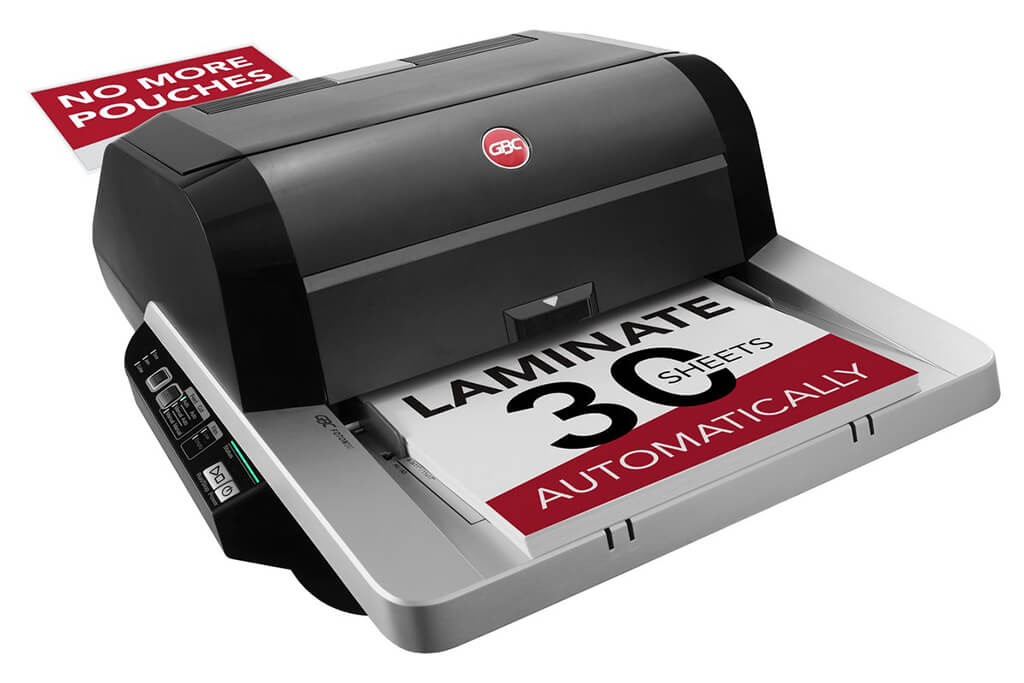
Image Source: ACCO Brands Corporation Official Site
(https://www.gbc-machines.com/products/gbc-foton-30-automatic-laminator)
(https://www.gbc-machines.com/products/gbc-foton-30-automatic-laminator)
Example facilities
Schools, hospitals, municipalities, etc.
Reasons for recommendation
Automates small-scale operations with fewer personnel
- With the push of a button, automatically laminates 30 sheets of A4 paper in 15 minutes. Its size allows it to be placed on a desk, making it easy to install.
- By fully automating the process from feeding to lamination, it enables the handling of jobs with low daily processing volumes in parallel with other operations.
The fact that it does not require dedicated operators or subsequent processes makes it suitable for small-scale sites.
| Maximum processing speed | 7.0 m/min |
|---|---|
| Maximum width | 297 mm (A3 compatible) |
| Warm-up | about 4 minutes |
| Processing type | roll type, double-sided (with borders) |
| Voltage (CE) | AC220 to 240V |
| Main unit dimensions | W 580 mm / D 440 mm / H 250 mm |
[About 1,000+ sheets per month]
Medium-lot production
Medium-lot production
Revo-Flex
(Lami Corporation)
(Lami Corporation)
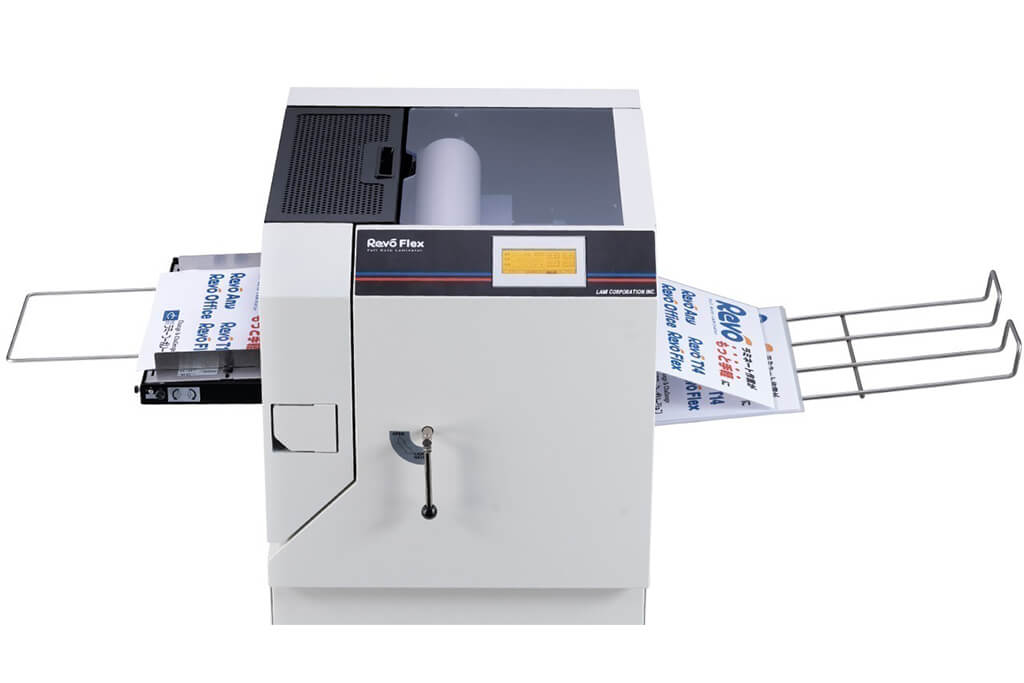
Image source: LAMI Corporation Official Website
(https://www.lami-corporation.co.jp/english/products/detail/51)
(https://www.lami-corporation.co.jp/english/products/detail/51)
Example facilities
Output centers, design offices, franchise headquarters, etc.
Reasons for recommendation
High-mix, fast-turnaround jobs are efficient through process reduction
- Completes trimming simultaneously with lamination, eliminating the need to move to subsequent processes or separate equipment.
Eliminates bottlenecks that tend to occur in on-demand printing and production sites. - High-precision automatic four-side trimming reduces trimming errors resulting from manual work, reducing film loss and the hassle of reprinting.
Even at sites with high-mix, small-lot production, it processes efficiently with consistent quality.
| Maximum processing speed | 2.0 m/min |
|---|---|
| Maximum width | 320 mm (SRA3 standard) |
| Warm-up | about 5 minutes *1 |
| Processing type | roll type, double-sided (border on/off selectable) |
| Voltage (CE) | AC230V |
| Main unit dimensions | W 1,300 mm / D 610 mm / H 1,080 mm *2 |
[10,000+ sheets per month]
High-lot production
High-lot production
Mini 76 TH
(Autobond Laminating)
(Autobond Laminating)
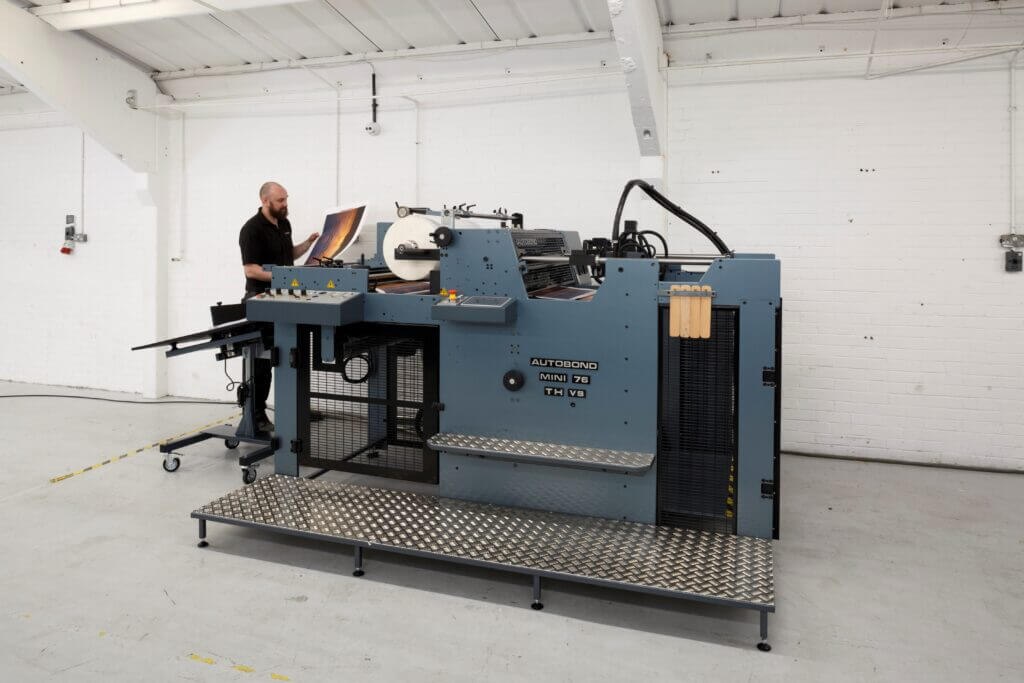
Image source: AUTOBOND Official Website
(https://www.autobondlaminating.com/machinery/thermal-lamination/mini/mini-76-th/)
(https://www.autobondlaminating.com/machinery/thermal-lamination/mini/mini-76-th/)
Example facilities
Printing factories, bookbinding lines, etc.
Reasons for recommendation
High-speed, continuous processing that can be integrated into mass-production lines
- Uses a steel side plate with a thickness of 20 mm described as sturdy like a tank. This rigid structure physically eliminates vibrations even at high-speed operations of 60 m per minute, maintaining stable processing accuracy.
- With a processing capacity of 60 m per minute, it can continuously handle large-format prints stably.
It demonstrates its true value when introduced as a part of a production line rather than as a standalone machine.
| Maximum processing speed | 60.0 m/min |
|---|---|
| Maximum width | 760 mm (B1+ compatible) |
| Warm-up | inquire for details |
| Processing type | roll type, single-sided or double-sided (borderless) |
| Voltage (CE) | inquire for details |
| Main unit dimensions | inquire for details |
*1. At 100°C (212°F) setting
*2. Dimensions when assembled, including the stand, tray, etc.