
Automatic Laminator Hub » Basic Knowledge About Laminators » How to Choose Laminating Rolls and Films
How to Choose Laminating Rolls and Films
Laminating rolls and films affect more than the appearance of the finished item. They also influence machine compatibility, operating costs, feeding reliability, film waste, and the amount of maintenance required in day-to-day use.
This guide explains how to choose laminating rolls and films for business use, covering roll width, core size, film thickness, surface finish, hot and cold lamination compatibility, and the key points to check before ordering consumables.
Note: Supported roll width, core size, film thickness, operating temperature, and recommended consumables vary by laminator model and supplier. Always confirm the latest specifications with the manufacturer or an authorised supplier before purchasing.
Key Takeaways
- Laminating rolls must match the roll width, core size, film type, and thickness supported by the laminator.
- Gloss, matt, and specialist finishes affect the appearance, readability, and durability of the finished output.
- Film thickness influences stiffness, handling durability, processing conditions, and running costs.
- For high-volume use, roll replacement, film waste, feeding reliability, and rejected output should be reviewed together.
What Are Laminating Rolls?
Laminating rolls are roll-format films used with roll laminators. Instead of placing each document into an individual pouch, the laminator continuously feeds film from a roll and applies it to printed materials such as sheets, posters, signs, menus, covers, and display items.
Many roll laminators use an upper and lower roll to laminate both sides of the material. As the material passes through the machine, film is applied continuously, making roll film suitable for larger batches and repeat production.
Because laminating rolls are machine-specific consumables, they should not be selected by appearance or price alone. Before buying, confirm the roll width, core size, film thickness, and hot or cold lamination method required by your laminator.
Laminating Rolls vs. Laminating Pouches
Laminating pouches and laminating rolls serve a similar purpose, but they are designed for different workflows. Pouches are individual sheets of film used one item at a time. Rolls are continuous films used for larger formats, higher volumes, or repeated processing.
Pouches are often convenient for occasional office use because each document can be placed into a ready-made pouch. Rolls are better suited to print shops, copy centres, schools, production environments, and workplaces that laminate many items or handle larger materials.
The right choice depends on volume and workflow. If your team only laminates a few cards, certificates, or notices, pouches may be sufficient. If operators regularly process posters, POS materials, menus, covers, or production documents, roll film can reduce repeated preparation work.
| Consumable type | Main feature | Suitable use |
|---|---|---|
| Laminating pouches | Individual film sheets, often with sealed or pre-formed edges | Cards, notices, certificates, and small batches |
| Laminating rolls | Continuous roll film for repeated processing | Posters, POS materials, menus, covers, and high-volume work |
Key Specifications to Check Before Buying Laminating Rolls
Roll Width
Roll width must match both the laminator and the material you plan to process. If the roll is too wide or too narrow for the machine, it may not fit correctly or may create unnecessary film waste.
When checking roll width, consider the finished size of the item as well as the margin needed for trimming and sealing. Menus, posters, and display materials often need enough film around the edges to seal the material securely.
If you laminate several sizes, review which size is used most often. Choosing a roll width based only on the largest possible job can increase waste on smaller jobs, while choosing a narrow roll may limit future applications.
Core Size
Core size refers to the diameter of the tube at the centre of the laminating roll. Laminators are designed to accept specific core sizes, so a roll with the wrong core may not fit the machine.
Common examples include 1-inch, 2-inch, and 3-inch cores, but the required size depends on the laminator. Larger or higher-volume machines may use a different core size from compact machines.
Before ordering rolls, check the machine manual or supplier specifications. If the core size is incorrect, the roll may not mount properly, feed evenly, or maintain reliable tension during operation.
Film Thickness
Film thickness affects how the finished material feels, how durable it is, and how easily it can be processed. Thicker film can add stiffness and improve handling durability, while thinner film may be more flexible and cost-effective for basic protection.
However, thicker film is not always the better choice. It may require higher heat, stronger pressure, or a machine that can handle a wider feed gap. If the machine does not support the selected thickness, the result may include poor adhesion, curling, jams, or uneven output.
Choose film thickness based on the application. Temporary notices may not require heavy film, while menus, cards, signs, covers, and frequently handled materials may need a more durable option.
Roll Length and Yield
Roll length affects replacement frequency and running costs. A lower-priced roll may not be more economical in practice if it is shorter, produces more waste, or needs to be replaced often during day-to-day operation.
For high-volume use, calculate cost by usable length or expected output, not just by price per roll. Frequent roll changes can also create downtime when operators need to stop production, reload film, adjust alignment, and restart the machine.
Longer rolls may support more continuous operation, but they also require a compatible laminator and enough storage space. Confirm that the machine can handle the roll size before purchasing larger rolls for efficiency.
Hot or Cold Film Compatibility
Hot laminating film uses heat to activate the adhesive layer and bond the film to the material. It is commonly used for general printed materials that can tolerate heat and require a durable finish.
Cold laminating film uses pressure-sensitive adhesive and is used when the material may be damaged by heat. It may be suitable for certain photos, thermal paper, or heat-sensitive printed materials.
Before buying film, confirm whether the laminator supports hot lamination, cold lamination, or both. Using the wrong film type can cause poor adhesion, feeding problems, or damage to the material.
Choose the Right Finish for the Application
Gloss Finish
Gloss laminating film creates a shiny surface and can make colours appear brighter. It is often used for posters, POS materials, display items, menu covers, and other printed materials where visual impact matters.
The main drawback is reflection. In bright rooms, near windows, or under strong lighting, gloss film may create glare that makes text harder to read. For materials that need to be read for long periods, check the viewing environment before choosing a gloss finish.
Matt Finish
Matt laminating film reduces shine and creates a softer, more understated appearance. It can improve readability in environments where glare is a concern.
Matt film is often used for menus, notices, educational materials, presentation documents, and signs that need a clean, calm finish. Compared with gloss film, it may also make fingerprints and reflections less noticeable.
Specialist Finishes
Specialist laminating films are used when the finished material needs more than basic protection. Examples may include soft-touch, anti-scratch, dry-erase, and other functional finishes.
These films should be selected based on the final use. Anti-scratch film may be useful for materials that are handled frequently, while dry-erase film can create reusable writing surfaces. Before choosing a specialist film, confirm that it is compatible with the laminator and suitable for the printed material.
How Laminating Rolls Affect Running Costs
Running costs are not determined by the price of one roll alone. Film waste, trimming loss, rejected output, replacement frequency, and operator time can all affect the total cost of lamination.
A roll that looks inexpensive may become costly if it causes wrinkles, bubbles, jams, or poor adhesion. Reworking failed output uses additional film, paper, ink, and labour. In high-volume environments, even a small increase in waste can affect total operating costs.
Roll width also affects cost. If the roll is much wider than the material, the extra film may be trimmed away and discarded. If the roll is too narrow, the material may not be sealed properly or may require a different workflow.
| Cost factor | What it affects |
|---|---|
| Film price | Direct consumable cost |
| Roll width | Film waste and trimming loss |
| Roll length | Replacement frequency and downtime |
| Film compatibility | Wrinkles, bubbles, jams, and rejected output |
| Finish quality | Appearance, durability, and suitability for the final use |
Common Mistakes When Choosing Laminating Rolls
Choosing Based on Price Alone
Low-priced film may reduce the initial consumable cost, but price alone does not show whether the roll will run smoothly with your machine. Poor compatibility or inconsistent quality can lead to more waste, more rejected output, and more operator intervention.
For occasional use, a small difference in film performance may not be noticeable. For repeated business use, reliable feeding and consistent adhesion can directly affect productivity and total cost.
Overlooking Machine Compatibility
Laminating rolls must fit the machine’s specifications. Roll width, core size, film thickness, and hot or cold compatibility should all be checked before purchase.
If any of these specifications are incorrect, the roll may not fit correctly, feed evenly, bond properly, or produce consistent output. Always check the machine manual or supplier information before switching to a new roll product.
Using the Same Film for Every Job
One film type is not always suitable for every application. A temporary notice, restaurant menu, frequently handled card, and poster may require different thicknesses, finishes, or durability levels.
Using film that is too heavy for simple jobs can increase costs unnecessarily. Using film that is too light for frequently handled materials can reduce durability and lead to replacement or rework. Match the film to the actual purpose of the finished item.
Pre-purchase Checklist for Laminating Rolls
Before purchasing laminating rolls, review the requirements from both the machine side and the output side. This helps prevent compatibility problems and unnecessary running costs.
| Check point | What to confirm |
|---|---|
| Machine compatibility | Supported roll width, core size, film thickness, and hot/cold lamination method |
| Application | Menus, posters, cards, POS materials, covers, signs, or general documents |
| Finish | Gloss, matt, soft-touch, anti-scratch, dry-erase, or other surface types |
| Durability | Handling frequency, moisture exposure, stiffness, and expected service life |
| Running cost | Roll price, usable length, waste, replacement frequency, and rejected output |
| Supplier support | Compatible roll availability, delivery time, and support for repeat orders |
These checks are especially important when purchasing rolls for repeated work. A roll that suits the machine, the material, and the workflow can help reduce interruptions and keep output quality more consistent.
Why Film Choice Matters for Fully Automatic Laminators
Fully automatic laminators depend on reliable film feeding, smooth material transport, and consistent bonding. If the film does not match the machine or application, the benefits of automation can be reduced by jams, wrinkles, rework, or frequent adjustments.
For high-volume environments, film replacement time also matters. If rolls need to be changed often or are difficult to load correctly, operators may lose time even when the laminator itself includes automation features.
Before choosing a fully automatic laminator, confirm which roll specifications it supports and how easily compatible rolls can be purchased. For production use, film choice should be evaluated together with machine performance, not after the machine has already been selected.
FAQs About Laminating Rolls
Q. What are laminating rolls used for?
A. Laminating rolls are used with roll laminators to apply protective film to printed materials such as posters, signs, menus, covers, POS materials, and other items. They are suitable for continuous processing and larger batches.
Q. How do I know which laminating roll fits my machine?
A. Check the laminator’s supported roll width, core size, film thickness, and hot or cold lamination method. If available, also check the manufacturer’s recommended consumables.
Q. What film thickness should I choose?
A. Choose film thickness based on the application. Thicker film can improve stiffness and durability, while thinner film may be more flexible and cost-effective. The laminator must also support the selected thickness.
Q. What is the difference between gloss and matt laminating film?
A. Gloss film creates a shiny surface and can make colours look brighter. Matt film reduces reflection and creates a softer finish that may be easier to read under strong lighting.
Q. Are cheap laminating rolls a good choice?
A. Cheap rolls are not always a poor choice, but price should not be the only factor. Check compatibility, feeding reliability, finish quality, waste, and the risk of rejected output before purchasing.
Conclusion
Laminating rolls and films should be selected based on both machine compatibility and the final use of the laminated material. Roll width, core size, film thickness, finish, hot or cold compatibility, and roll length all affect output quality and running costs.
For business use, the best choice is not always the cheapest roll. A compatible film that feeds smoothly, bonds consistently, and matches the application can reduce waste, rework, and operator workload. When choosing a fully automatic laminator, check supported film specifications early so the machine and consumables work together in day-to-day operation.
[Advertisement]
[By production scale]
Three Fully Automatic Laminators
[By production scale]
Three Fully Automatic Laminators
When choosing a fully automatic laminator, it is important to base your decision on the volume you process in a day rather than the size of the main unit or equipment scale.
This is an introduction to fully automatic laminators that match the workload and operational style of different production scales.
Advertiser Disclosure:
We receive compensation from some of the companies listed below.This compensation may affect which companies are included and the order in which they appear.
[About 100+ sheets per month]
Small-lot production
Small-lot production
GBC Foton 30
(ACCO Brands Corporation)
(ACCO Brands Corporation)
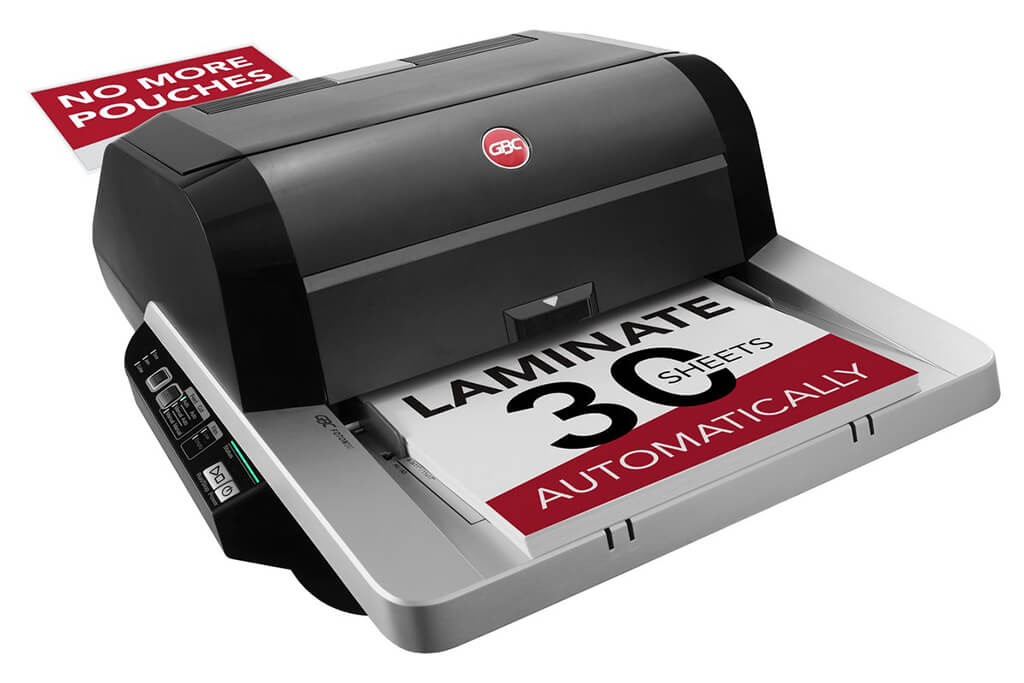
Image Source: ACCO Brands Corporation Official Site
(https://www.gbc-machines.com/products/gbc-foton-30-automatic-laminator)
(https://www.gbc-machines.com/products/gbc-foton-30-automatic-laminator)
Example facilities
Schools, hospitals, municipalities, etc.
Reasons for recommendation
Automates small-scale operations with fewer personnel
- With the push of a button, automatically laminates 30 sheets of A4 paper in 15 minutes. Its size allows it to be placed on a desk, making it easy to install.
- By fully automating the process from feeding to lamination, it enables the handling of jobs with low daily processing volumes in parallel with other operations.
The fact that it does not require dedicated operators or subsequent processes makes it suitable for small-scale sites.
| Maximum processing speed | 7.0 m/min |
|---|---|
| Maximum width | 297 mm (A3 compatible) |
| Warm-up | about 4 minutes |
| Processing type | roll type, double-sided (with borders) |
| Voltage (CE) | AC220 to 240V |
| Main unit dimensions | W 580 mm / D 440 mm / H 250 mm |
[About 1,000+ sheets per month]
Medium-lot production
Medium-lot production
Revo-Flex
(Lami Corporation)
(Lami Corporation)
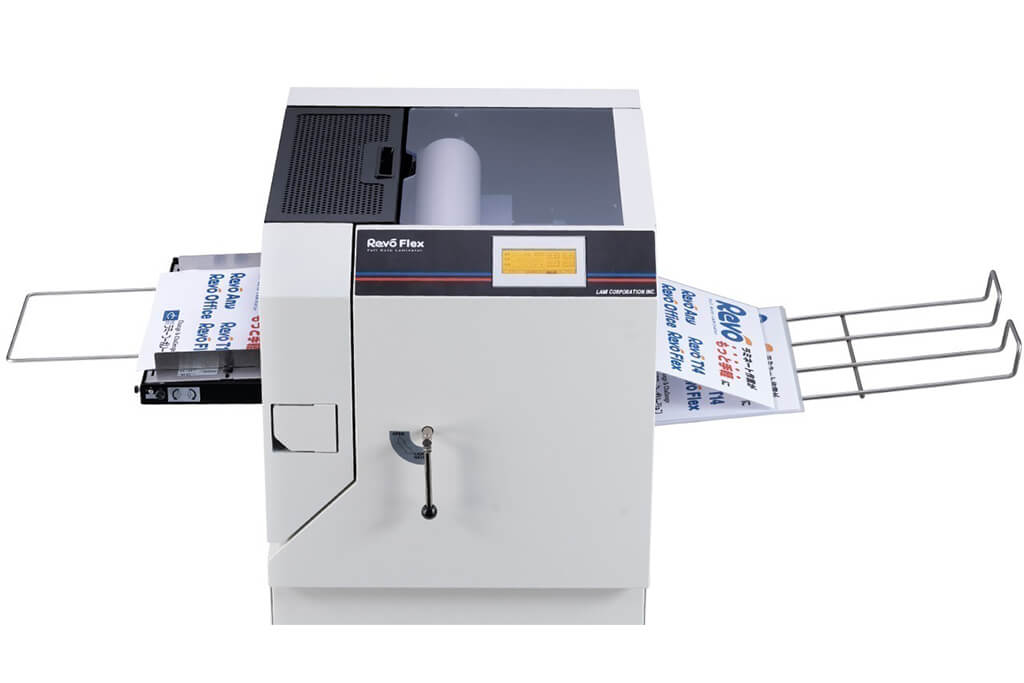
Image source: LAMI Corporation Official Website
(https://www.lami-corporation.co.jp/english/products/detail/51)
(https://www.lami-corporation.co.jp/english/products/detail/51)
Example facilities
Output centers, design offices, franchise headquarters, etc.
Reasons for recommendation
High-mix, fast-turnaround jobs are efficient through process reduction
- Completes trimming simultaneously with lamination, eliminating the need to move to subsequent processes or separate equipment.
Eliminates bottlenecks that tend to occur in on-demand printing and production sites. - High-precision automatic four-side trimming reduces trimming errors resulting from manual work, reducing film loss and the hassle of reprinting.
Even at sites with high-mix, small-lot production, it processes efficiently with consistent quality.
| Maximum processing speed | 2.0 m/min |
|---|---|
| Maximum width | 320 mm (SRA3 standard) |
| Warm-up | about 5 minutes *1 |
| Processing type | roll type, double-sided (border on/off selectable) |
| Voltage (CE) | AC230V |
| Main unit dimensions | W 1,300 mm / D 610 mm / H 1,080 mm *2 |
[10,000+ sheets per month]
High-lot production
High-lot production
Mini 76 TH
(Autobond Laminating)
(Autobond Laminating)
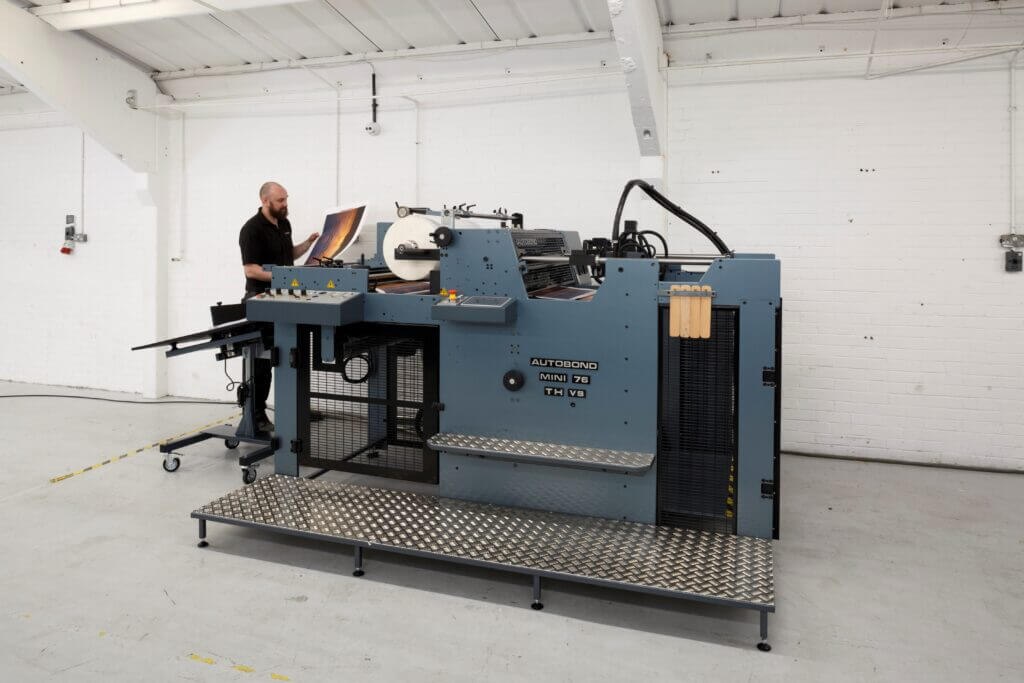
Image source: AUTOBOND Official Website
(https://www.autobondlaminating.com/machinery/thermal-lamination/mini/mini-76-th/)
(https://www.autobondlaminating.com/machinery/thermal-lamination/mini/mini-76-th/)
Example facilities
Printing factories, bookbinding lines, etc.
Reasons for recommendation
High-speed, continuous processing that can be integrated into mass-production lines
- Uses a steel side plate with a thickness of 20 mm described as sturdy like a tank. This rigid structure physically eliminates vibrations even at high-speed operations of 60 m per minute, maintaining stable processing accuracy.
- With a processing capacity of 60 m per minute, it can continuously handle large-format prints stably.
It demonstrates its true value when introduced as a part of a production line rather than as a standalone machine.
| Maximum processing speed | 60.0 m/min |
|---|---|
| Maximum width | 760 mm (B1+ compatible) |
| Warm-up | inquire for details |
| Processing type | roll type, single-sided or double-sided (borderless) |
| Voltage (CE) | inquire for details |
| Main unit dimensions | inquire for details |
*1. At 100°C (212°F) setting
*2. Dimensions when assembled, including the stand, tray, etc.